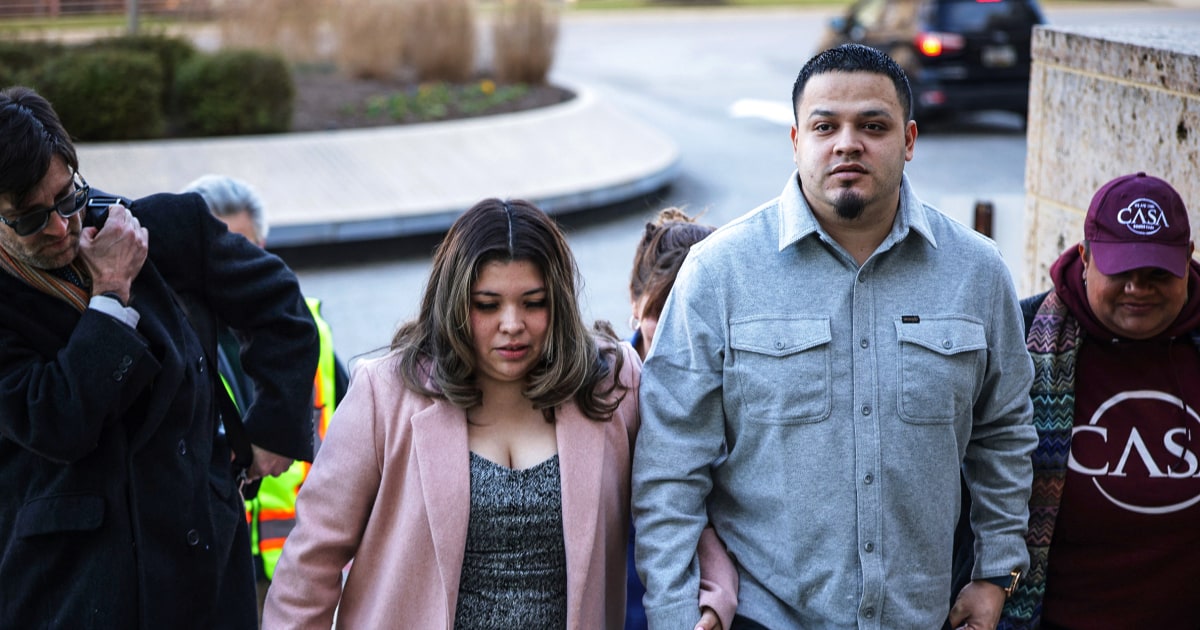
NASHVILLE, Tennessee – A newly sealed order in the criminal case against Kilmer Abrego Garcia reveals that high-level Justice Department officials pressured him to indict him, calling it a “top priority,” only to have him mistakenly deported and then ordered to return to the US.
Abrego Garcia has pleaded not guilty to human trafficking charges in federal court in Tennessee. He is seeking to dismiss the case on the grounds that the prosecution is retaliatory — a way for President Donald Trump’s administration to punish him for the embarrassment of his wrongful deportation.
To support that argument, he has asked the government to hand over documents that explain how the decision was made to prosecute him in 2025 for an incident that occurred in 2022. On December 3, U.S. District Judge Waverly Crenshaw filed a sealed order that forced the government to provide certain documents to Abrego García and his lawyers. That order was unsealed on Tuesday and shed new light on the case.
Earlier, Crenshaw found that there was “some evidence” that the prosecution of Abrego García may have been retaliatory. He specifically cited a statement by Deputy Attorney General Todd Blanche on a Fox News program that appeared to suggest that the Justice Department charged Abrego García because he won his wrongful deportation case.
Rob McGuire, who was the acting U.S. Attorney for the Middle District of Tennessee until late December, argued that those statements were irrelevant because he alone decided to prosecute, and he has no animosity toward Abrego García.
In the newly unsealed order, Crenshaw writes, “Some documents suggest not only that McGuire was not the sole decision maker, but that he actually reported to others at DOJ and that the decision to prosecute Abrego may have been a joint decision.”
DOJ officials did not immediately respond to a request for comment.
The human trafficking charge stems from a 2022 traffic stop in Tennessee, where Abrego Garcia was stopped for speeding. There were nine passengers in the car and state troopers discussed the possibility of human trafficking among themselves. However, he was eventually allowed to leave with only a warning. The case was handed over to Homeland Security Investigations, but there is no record of any effort to charge him as of April 2025, according to court records.
The order does not provide further details about what is contained in the documents turned over to Abrego Garcia, but it does show that Akash Singh, who worked under Blanch in the Office of the Deputy Attorney General, contacted McGuire about Abrego Garcia’s case on April 27, the same day that McGuire received a file on the case from Homeland Security Investigations. This happened several days after the US Supreme Court ruled in favor of Abrego García on April 10.
On April 30, Singh said in an email to McGuire that according to the order, prosecution was the “top priority” for the Office of the Deputy Attorney General. Singh and McGuire continued to communicate about the prosecution. On May 15, McGuire emailed his staff that Blanch “would like Garcia to be charged as soon as possible,” Crenshaw writes.
On May 18, Singh wrote to McGuire and others asking them to put the draft indictment on hold until he received “clearance” to file it. “The implication is that ‘approval’ would come from the Office of the Deputy Attorney General,” Crenshaw writes.
A hearing on a motion to dismiss the case on the grounds of retaliatory prosecution is scheduled for Jan. 28.