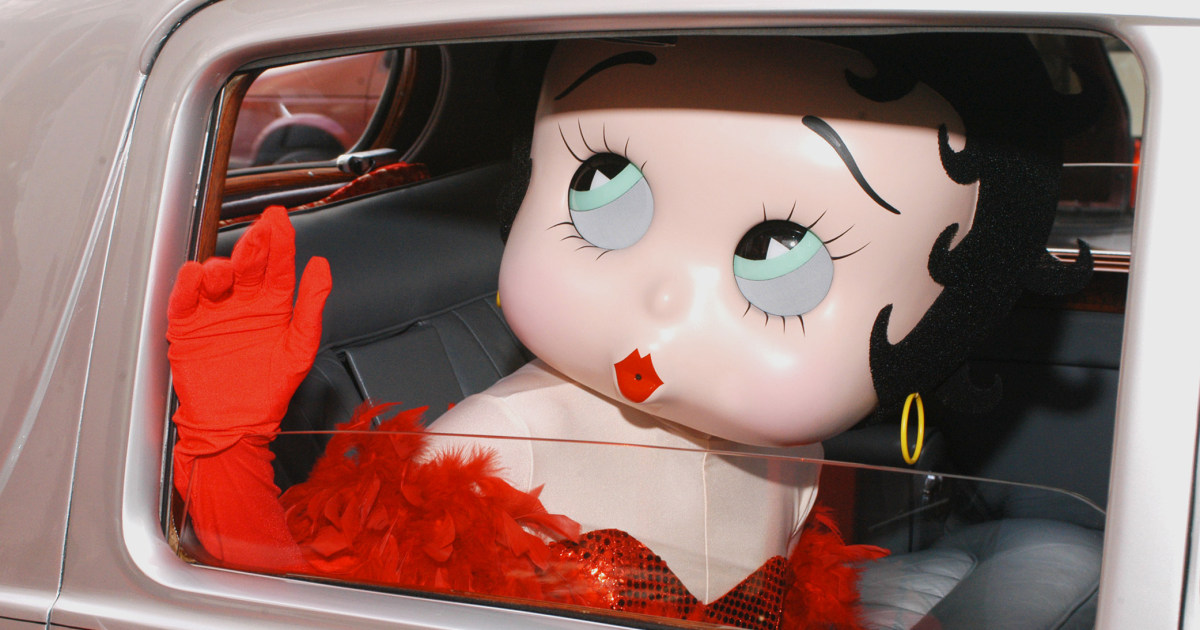
Los Angeles – Betty Boop And “Blondie” Joining Mickey Mouse and Winnie the Pooh in the public domain.
The first appearances of classic cartoon and comic characters are among the pieces of intellectual property whose 95-year US copyright has maxed out, putting them into the public domain on January 1. This means that creators can use and reuse them without permission or payment.
The 2026 batch of newly public artworks doesn’t have the sparkle of Mickey or Winnie’s more recent entries into the public domain. But since 2019 — the end of a 20-year IP drought brought on by congressional copyright extensions — each annual harvest has been a reward for supporters of more work that belongs to the public.
“This is a big year,” said Jennifer Jenkins, law professor and director of the Harvard Business School. Duke Center for the Study of the Public DomainFor whom New Year’s Day is celebrated public domain day“It’s just the sheer familiarity of all this culture,”
Jenkins said that, collectively, this year’s work “reflects the fragility between two wars and the depths of the Great Depression.”
Here’s a closer look at what will enter the public domain on Thursday, based on research by Jenkins and her center.
Cartoons and comics increase enthusiasm
Betty Boop started out as a dog. seriously.
When she first appeared in the 1930 short film “Dizzy Dishes”, one of four of her cartoons to enter the public domain, she was already fully recognizable as a Jazz Age flapper, later commemorated on countless tattoos, T-shirts, and bumper stickers. She has a baby-like face, short hair with well-groomed curls, attractive eyelashes and a small mouth. But he also has floppy poodle ears and a small black nose. They will soon change to dangling earrings and a small white nose.
She originally started out as Minnie Mouse, playing a popular anthropomorphic dog named Bimbo, whom she would eventually outwit – and push aside. She has a supporting role in “Dizzy Dishes”, in which she performs a catchy song and dance in a little black dress. Her name is not revealed, but she sings “Boop Boop, A Doop”.
Jenkins suggests that this dog Betty Boop might be rich for exploitation in new works, and has an independent idea: “He was bitten by a radioactive dog, that’s why he had this weird background,” she said, laughing. “This movie needs to be made.”
The character was designed and owned by Fleischer Studios, and the shorts were released by Paramount Pictures. She was based at least in part on singer Helen Kane, who was known as the “Boop-Oop-A-Doop Girl” for her 1929 hit song. Kane would lose a lawsuit over the use of the Betty Boop character and phrase. During the proceedings, the defense alleged that black singer Esther Lee Jones was the first to use similar phrases.
Artists are now free to use this initial boop in films and similar works. But creating the goods won’t be free. In an important distinction often raised by Disney on Mickey Mouse, a character’s trademark is separate from the copyrights of the works that depict them. The Fleischer Productions trademark of Betty Boop remains intact.
Boops and doops were apparently in the air in the 1930s. Blondie Boopadoop, like Betty, was a young flapper, and was the central character of Chic Young’s newspaper comic strip beginning in 1930. It inspired a film series and radio show, and continues to run today in newspapers that still carry the comics.
The strip followed her carefree air throughout her life with her lover Dagwood Bumstead. The two married (and changed their names) in 1933, and the strip became the sandwich-heavy domestic comedy familiar to later readers. Although the strip was based on one woman’s life, Dagwood in many ways became its breakout star – a proto- adam driverAs a breakout actor, if you like. “Girls.”
Nine new Mickey Mouse cartoons are also becoming public domain, two years after the first version of “Steamboat Willie” became public property. This year they were joined by their dog Pluto, who was known as Rover in 1930. (He would get his long-term nickname the following year.)
Books bring big spy debut
Books falling into the public domain this year open the door to three iconic spies of the 20th century:
- Teenage sleuth Nancy Drew, whose first four books appeared in 1930, beginning with “The Secret of the Old Clock.” These were written by Mildred Benson under the pen name Caroline Keene.
- Middle-aged detective Sam Spade, who breezes through the full-length book version of Dashiell Hammett’s “The Maltese Falcon.” (It was serialized in a magazine last year.)
- The elderly detective Miss Marple, who solves her first mystery in Agatha Christie’s “Murder at the Vicarage”.
A year after his “The Sound and the Fury” became public, William Faulkner’s “As I Lay Dying” became public domain. This will help him in getting the Nobel Prize in Literature.
And the kiddie publishing legends Dick and Jane, who taught generations to read and became essential parody fodder for decades, became public through “Elsen Basic Readers” textbooks.
Movies include Marx, Marlene and Oscar winners
A year after their first film “The Coconuts” entered the public domain, the Marx Brothers’ beloved “Animal Crackers” joined them as they entered their peak of high cinematic antics. The film depicts Groucho, Harpo, Chico, and Zeppo attacking a Long Island Society party celebrating an explorer of Africa.
Other films that have entered the public domain include:
- Joseph von Sternberg’s German film “The Blue Angel” which exposed the most hated image of Marlene Dietrich in the film world.
- “King of Jazz”, featuring the first screen appearance of Bing Crosby.
- A pair of Oscar Best Picture winners, “All Quiet on the Western Front”, which won in 1930, and “Cimarron”, which won in 1931. At the time the award was known as “Outstanding Production”, and the Academy Award eligibility period did not coincide with the calendar year.
The coming decade would bring a veritable abundance of Hollywood Golden Age films into the public domain. 2027 will be a truly macabre year, featuring titles dating back to the original 1931 Universal Pictures versions of “Dracula” and “Frankenstein.”
Dreamy and huggable tunes set in the 1930s
As in years past, a whistle-worthy stream of tunes from the Great American Songbook will be made public:
- Four favorite classics written by George Gershwin, with lyrics by his brother Ira: “Embraceable You,” “I’ve Got a Crush on You,” “But Not for Me” and “I Got Rhythm.”
- “Georgia on My Mind,” written by Hoagy Carmichael and Stuart Gorrell.
- “Dream a Little Dream of Me”, written by Gus Kahn, Fabian Andre and Wilbur Schwandt.
Various laws regulate the actual recordings of songs, and those that have come into the public domain date back to 1925. These include Rodgers and Hart’s “Manhattan” by the Knickerbockers, “Nobody Knows the Trouble I’ve Seen” by Marian Anderson and “The St. Louis Blues” by Bessie Smith, featuring Louis Armstrong.